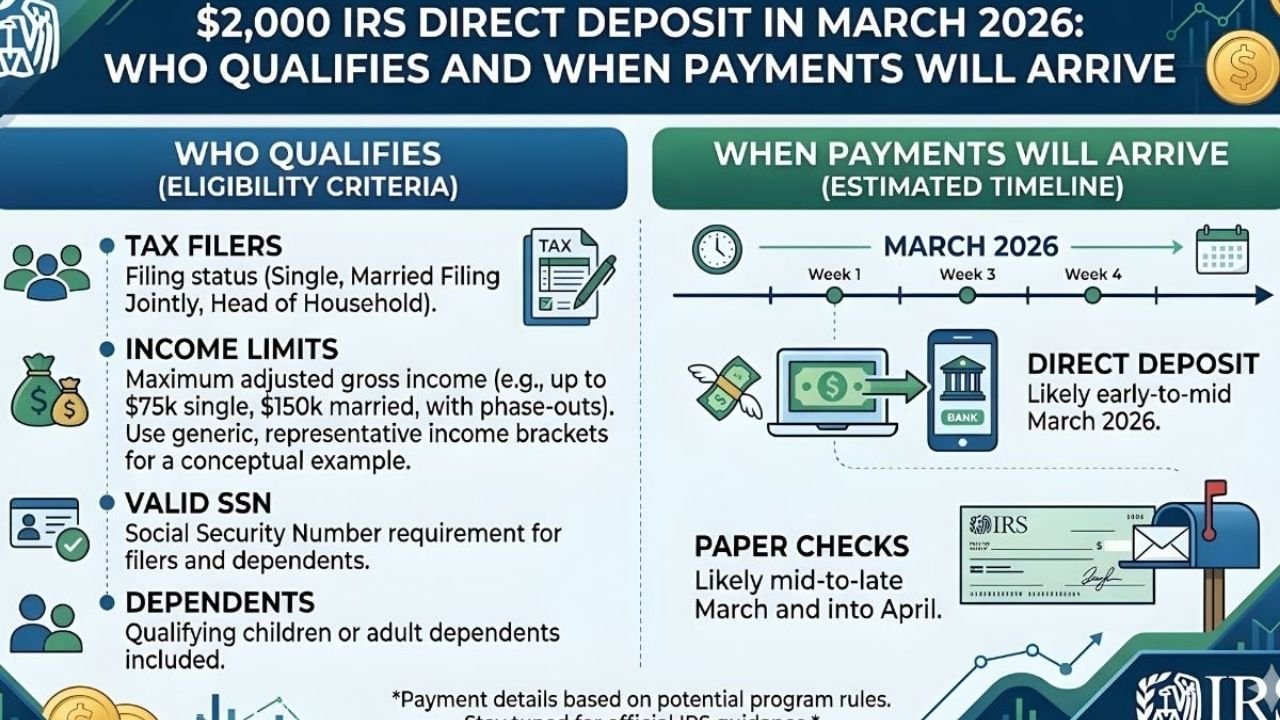
In recent weeks, growing attention has surrounded a proposed $2,000 payment from the Internal Revenue Service (IRS), sparking widespread curiosity across the United States. As discussions continue, many individuals are seeking clarity on eligibility, payment timelines, and the broader financial impact of such a measure. While the idea offers hope, it is essential to understand the facts behind the proposal and what it could realistically mean for households.
The Background Behind the $2,000 Payment Proposal
The concept of a $2,000 IRS payment stems from ongoing policy discussions focused on strengthening economic stability. Lawmakers have been exploring ways to provide direct financial support to citizens amid persistent economic pressures, including inflation and rising living costs.
Direct payments have historically been used as a tool to stimulate economic activity. By putting money directly into consumers’ hands, governments aim to boost spending, support businesses, and maintain economic momentum. This proposal reflects a continuation of that strategy, designed to offer immediate relief while encouraging broader financial circulation.
However, it is important to note that, as of now, this payment remains under discussion and has not been officially approved. Any final decision will depend on legislative action and policy alignment at the federal level.
Who Could Qualify for the $2,000 Payment
Eligibility is one of the most critical aspects of any potential stimulus payment. While final criteria have not been confirmed, expectations suggest that the structure would mirror previous stimulus programs.
Income-Based Qualification
Eligibility would likely depend on adjusted gross income (AGI). Individuals earning below a specified threshold may qualify for the full amount, while those above it could receive reduced payments or none at all.
- Single filers may qualify under a set income cap
- Married couples filing jointly could have a higher combined threshold
- Higher-income earners may see phased reductions
Tax Filing Status
Your most recent tax return will likely play a key role in determining eligibility. Those who have filed their taxes accurately and on time are typically processed faster and more efficiently.
Dependents and Family Size
Families with dependents could receive additional financial support. This approach aims to provide extra assistance to households with greater financial responsibilities, especially those supporting children or elderly family members.
Other Considerations
Certain groups, such as Social Security recipients or individuals receiving federal benefits, may also qualify automatically, depending on how the program is structured.
When Could Payments Arrive
Timing is another major concern for those anticipating financial assistance. If the proposal is approved, the payment schedule will depend on both legislative progress and administrative execution.
Legislative Approval Timeline
Before any payments are issued, the proposal must pass through Congress and receive formal approval. This process can take time, depending on political negotiations and policy priorities.
IRS Distribution Process
Once approved, the IRS would begin distributing payments using existing systems. Based on previous stimulus rollouts:
- Direct deposits are typically issued first
- Paper checks and prepaid debit cards may follow
- Processing times can vary depending on individual circumstances
In earlier programs, many recipients received payments within a few weeks of approval. However, delays can occur due to verification processes or outdated banking information.
Economic Impact of a $2,000 Payment
Beyond individual benefits, a large-scale payment of this nature carries broader economic implications.
Boost in Consumer Spending
When households receive direct payments, they often spend on essential goods and services. This increased demand can benefit sectors such as retail, housing, and transportation.
Short-Term Financial Relief
For many families, such payments can help cover immediate expenses like rent, utilities, or groceries. This relief can reduce financial stress and improve overall stability.
Long-Term Economic Effects
Economists suggest that while the short-term effects are visible through increased spending, long-term outcomes depend on factors such as inflation, employment trends, and overall fiscal policy.
A carefully balanced approach is necessary to ensure that economic growth is supported without triggering unintended consequences.
Public Reaction and Ongoing Debate
Public response to the proposed payment has been largely positive, especially among those facing financial challenges. Many view it as a necessary step to address rising costs and economic uncertainty.
However, the proposal has also sparked debate.
Supporters’ Perspective
Supporters argue that direct payments are an effective way to provide immediate relief and stimulate economic activity. They emphasize the importance of helping households maintain financial stability during uncertain times.
Critics’ Concerns
Critics raise concerns about potential inflationary effects, suggesting that increased spending could drive prices higher. Others question how such payments would be funded and whether they are sustainable in the long term.
These discussions highlight the complexity of balancing economic support with fiscal responsibility.
What You Should Do Now
While the $2,000 payment remains unconfirmed, there are practical steps you can take to stay prepared.
Keep Your Tax Information Updated
Ensure that your latest tax return is filed and accurate. Updated banking details can help avoid delays if payments are issued.
Monitor Official Announcements
Rely on verified government sources for updates rather than rumors or speculation. Official announcements will provide the most accurate information regarding eligibility and timelines.
Plan Financially
Even without confirmation, it is wise to manage your finances carefully. Avoid making financial decisions based solely on expected payments that have not yet been approved.
Final Thoughts
The proposed $2,000 IRS payment has generated significant attention due to its potential to provide meaningful financial support. While the idea offers optimism, it is important to remain grounded in verified information and realistic expectations.
Until official confirmation is provided, the proposal remains part of ongoing policy discussions. Staying informed, prepared, and financially cautious is the best approach as developments continue to unfold.