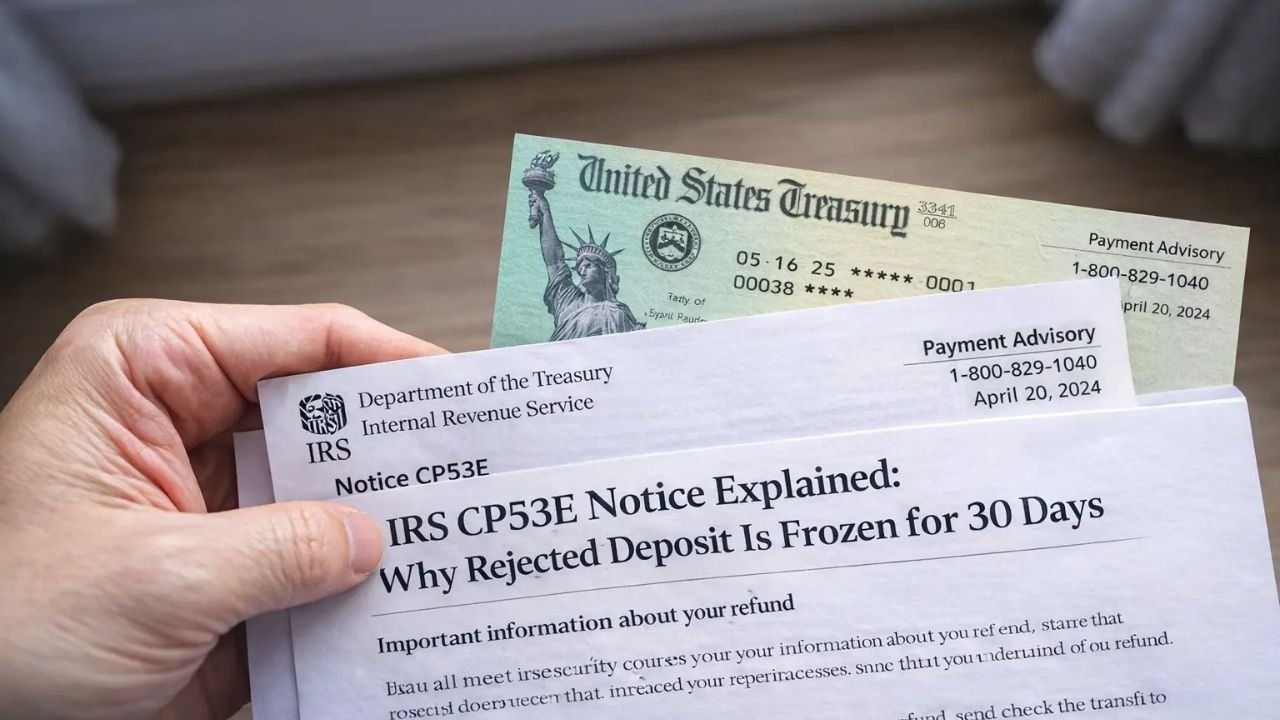
Few financial moments feel as anticipated as receiving a tax refund—especially when it’s already been factored into your plans. But for some taxpayers, that expectation is suddenly interrupted by an unexpected letter: the CP53E notice. Issued by the Internal Revenue Service, this notice indicates that your refund has been temporarily frozen for up to 30 days due to a failed direct deposit.
While the situation may feel alarming, it is not uncommon—and more importantly, it is fixable. Understanding why this happens and how to respond strategically can help you regain control and access your funds without unnecessary delays.
What Is a CP53E Notice?
A CP53E notice is triggered when the IRS attempts to deposit your tax refund into your bank account, but the transaction is rejected. Instead of redirecting the funds immediately, the IRS places a temporary hold to prevent the money from being misrouted or lost.
Why Would a Direct Deposit Fail?
There are several reasons why your refund deposit might be rejected:
- Incorrect account or routing number entered on your tax return
- Closed or inactive bank account
- Name mismatch between the taxpayer and the account holder
- Account restrictions or bank-specific compliance issues
In each case, the rejection prompts a safeguard response—your refund is frozen while the issue is reviewed and corrected.
Why the IRS Freezes Your Refund for 30 Days
The 30-day hold period is not arbitrary. It serves a critical function in protecting both taxpayers and financial institutions from potential errors or fraud.
A Built-In Security Buffer
During this window, the IRS verifies the integrity of your refund details. This pause ensures that funds are not mistakenly sent to the wrong account or exploited through fraudulent activity.
For taxpayers, this means:
- Time to identify and correct errors
- Opportunity to confirm banking details
- Protection against unauthorized redirection of funds
While it may feel like a delay, the freeze is ultimately designed to preserve the accuracy and safety of your refund.
Immediate Steps to Resolve the Issue
Receiving a CP53E notice should prompt swift but thoughtful action. The faster you verify and correct the issue, the sooner your refund can be released.
1. Review Your Tax Return Details
Start by carefully checking the banking information you provided when filing your return. Even a single-digit error in your account number can lead to a rejected deposit.
Pay close attention to:
- Routing number accuracy
- Account number sequence
- Account type (checking vs. savings)
2. Contact Your Financial Institution
Your bank can often provide insight into why the deposit was rejected. Whether it’s due to account status, compliance rules, or technical issues, understanding the bank’s perspective is essential.
Ask your bank:
- Whether the account is active and eligible for deposits
- If any recent changes may have affected transactions
- Whether there are restrictions on incoming transfers
3. Follow IRS Instructions Carefully
The CP53E notice may include specific guidance or requests for additional information. Respond promptly and ensure all documentation is accurate.
You may need to:
- Confirm your identity
- Provide updated banking details
- Verify your mailing address
Timely and accurate responses can significantly speed up the resolution process.
How You’ll Receive Your Refund After the Freeze
Once the issue is resolved, the IRS typically reissues your refund—often in the form of a paper check sent to your address on file.
Why Paper Checks Are Common After CP53E
After a failed direct deposit, the IRS may opt for a more controlled delivery method to avoid repeated errors. Paper checks, while slower, offer a reliable fallback option.
This means your refund timeline may extend beyond the initial 30-day freeze, depending on processing and mailing times.
Common Mistakes That Lead to CP53E Notices
Understanding the root causes can help you avoid similar issues in the future. Many CP53E notices stem from simple but critical errors.
Data Entry Errors
Manual entry of banking details increases the risk of mistakes. Double-checking numbers before submission is one of the simplest yet most effective preventive measures.
Last-Minute Account Changes
Switching bank accounts close to tax season can create complications, especially if old account details are mistakenly used.
Shared or Third-Party Accounts
Depositing refunds into accounts not solely under your name can sometimes trigger rejections due to verification mismatches.
Preventing Future Refund Delays
A proactive approach during tax filing season can significantly reduce the risk of encountering a CP53E notice again.
Verify Before You File
Always review your tax return thoroughly before submission. Consider using tax software that auto-validates banking details to minimize human error.
Keep Your Financial Information Updated
Ensure that your bank account is active, properly registered under your name, and capable of receiving electronic deposits.
Maintain Consistent Records
Keeping a record of your tax filings, bank confirmations, and transaction history can make it easier to resolve any discrepancies quickly.
The Broader Financial Impact
While a 30-day delay may seem minor, it can disrupt carefully planned financial decisions—especially for individuals relying on their refund for significant expenses or investments.
Managing Cash Flow During the Delay
If your refund is part of your short-term financial planning, consider temporary adjustments such as:
- Delaying non-essential expenses
- Using emergency savings if necessary
- Revising payment timelines for upcoming obligations
Being prepared for such contingencies can help maintain financial stability even when unexpected delays occur.
Final Thoughts
A CP53E notice may interrupt your expectations, but it is ultimately a protective mechanism designed to ensure your refund reaches you सुरक्षित and accurately. By understanding the причины behind the freeze and taking prompt corrective action, you can navigate the process with confidence and clarity.
In an increasingly digital financial environment, precision and vigilance are essential. Small details—like a single incorrect digit—can have outsized consequences. Yet with careful planning and informed decision-making, such disruptions can be minimized or avoided altogether.
Disclaimer: This article is intended for informational purposes only and does not constitute tax or legal advice. For personalized guidance, consult a qualified tax professional or contact the Internal Revenue Service directly.